
Table of Contents
Why Am I So Forgetful? Discover 9 Proven Solutions
You walk into the kitchen and stand there like a person who has lost both the plot and the shopping list. Your phone is in your hand, your coffee is in the microwave, and your train of thought has apparently gotten off in another county. If you’ve been asking, Why am I so forgetful?, you’re in very crowded company in 2026.
Forgetfulness has become one of those quiet worries people carry around like a loose button in a coat pocket. It jingles around all day. You forget a password, miss an appointment, blank on a name you absolutely know, and suddenly your mind starts drafting dramatic theories. Based on our research, most cases of forgetfulness are linked to common and treatable factors such as stress, poor sleep, diet, overload, medication effects, and simple mental exhaustion. Sometimes, though, the answer to Why am I so forgetful? points to something that needs medical attention.
We analyzed the latest guidance, research findings, and real-world strategies to sort out what actually helps. You’ll see the most common causes, what food and sleep do to your memory, when to worry, how chiropractic care and hyperbaric therapy may fit in, and nine practical solutions you can start using now. The goal isn’t to terrify you. It’s to hand you a flashlight.

Introduction: The Curious Case of Forgetfulness
Forgetfulness in 2026 feels oddly democratic. It visits college students, parents, executives, retirees, and people who are merely trying to remember why they opened twelve browser tabs in the first place. A world packed with alerts, multitasking, short sleep, and low-grade stress has made memory lapses feel almost fashionable, though no one would choose them if given a proper menu.
When you ask, Why am I so forgetful?, you’re usually not asking for poetry. You want a reason. You want to know whether this is normal, temporary, or a warning bell with a little hammer already swinging inside it. Studies and clinical observations keep pointing to the same truth: memory problems often have roots you can identify. According to survey data frequently cited in health reporting, about 60% of adults report memory issues at least occasionally. That number is large enough to fill a stadium and leave a miserable line for parking.
We found that the most useful way to approach forgetfulness is to stop treating it like a character flaw. Memory depends on sleep architecture, blood flow, attention, nutrition, mood, hormones, and nervous system health. If one of those systems is off, your recall can get wobbly. Understanding the root cause matters because the fix for sleep loss is not the fix for vitamin deficiency, and the fix for chronic stress is not the fix for ADHD. The sooner you identify the pattern, the sooner you can do something sensible instead of just buying another planner.
Common Causes of Forgetfulness
If you keep wondering, Why am I so forgetful?, the most common causes are also the least glamorous: stress, sleep deprivation, aging, information overload, depression, certain medications, alcohol use, and nutritional deficiencies. According to the CDC, cognitive health is influenced by physical health, emotional well-being, and lifestyle patterns, which is a scientific way of saying your brain notices when you treat your body like a rental car.
That widely reported figure—60% of adults reporting memory issues—makes sense when you look at daily life. One 2024 review on working memory and stress found that high cognitive load reduces recall accuracy and mental flexibility. Another practical fact: adults who sleep less than 7 hours a night are more likely to report trouble concentrating, according to public health sleep guidance. And as people age, processing speed can slow, even when serious disease is not present. That doesn’t mean every lost word is a tragedy; it means your brain may need different conditions to work well.
Here are the usual suspects we recommend you rule out first:
- Stress and anxiety: high cortisol can interfere with attention and recall.
- Poor sleep: memory consolidation happens during sleep, especially deep and REM stages.
- Medication side effects: antihistamines, sedatives, some antidepressants, and others can affect memory.
- Vitamin deficiencies: low B12, low vitamin D, and iron deficiency can contribute to brain fog.
- Depression: often shows up as forgetfulness, slowed thinking, and poor concentration.
- Alcohol and substance use: even moderate overuse can impair short-term memory.
A real-world example makes this clearer. A 38-year-old office manager starts forgetting names, misses two meetings, and panics that something is terribly wrong. But she’s sleeping 5.5 hours a night, working through lunch, drinking heavily on weekends, and taking a nighttime antihistamine. In our experience, that sort of cluster explains a great deal. The brain is not a magician. It’s an organ.

The Role of Diet in Memory
Diet affects memory in the same way fuel affects a car, except your brain has opinions and can get quite sulky. If you live on ultra-processed snacks, too much sugar, not enough protein, and whatever was nearest the gas station register, your attention and recall may start behaving like bored housecats. According to Harvard Health, dietary patterns linked to brain health tend to include vegetables, berries, fish, olive oil, nuts, legumes, and whole grains. That list is less thrilling than a plate of fries, but it does have science on its side.
Omega-3 fatty acids deserve special mention because they keep turning up in research on cognition. DHA, one of the main omega-3 fats found in fatty fish, is a structural component of the brain. A number of studies have linked higher omega-3 intake with better memory performance, especially in older adults and people with low baseline intake. We analyzed multiple reviews and found that regular fish consumption—about 1 to 2 servings per week—is often associated with healthier cognitive aging. Deficiencies matter too. Low vitamin B12 can cause memory issues, confusion, and fatigue, while iron deficiency can reduce oxygen delivery and concentration.
If you’re asking, Why am I so forgetful?, start with a one-week food audit. Write down what you actually eat, not what you meant to eat while buying spinach with saintly intentions. Then take these steps:
- Add omega-3 sources such as salmon, sardines, trout, walnuts, or chia seeds at least twice weekly.
- Build meals around protein and fiber to stabilize blood sugar and reduce energy crashes.
- Check hydration; even mild dehydration can affect focus and short-term memory.
- Ask your clinician about labs for B12, iron, folate, and vitamin D if fatigue or brain fog is ongoing.
We recommend treating diet as foundational, not ornamental. You may not remember where you left your keys, but your brain absolutely remembers whether you fed it well.
How Sleep Affects Your Memory
Sleep is where memory gets filed, stamped, and placed in the proper mental drawer instead of being flung into a hallway cupboard. During sleep, especially slow-wave and REM sleep, the brain consolidates information gathered during the day. Miss enough sleep, and your memories don’t get processed properly. They pile up like unopened mail.
The Sleep Foundation notes that adults generally need 7 to 9 hours of sleep per night. Yet as of 2026, sleep tracking surveys continue to show a sizable chunk of adults routinely getting less than that. Some recent consumer sleep reports put average sleep under 7 hours on work nights, and short sleepers consistently report worse concentration, slower reaction time, and more memory complaints. One bad night can make you foggy. Several bad weeks can make you think your brain has gone out for cigarettes.
When people say, Why am I so forgetful?, sleep is often the answer wearing a fake mustache. We found that memory problems tied to sleep usually come with a specific pattern:
- You forget recent conversations but remember older information.
- You reread the same sentence three times.
- You feel “wired and tired,” especially in the afternoon.
- You rely on caffeine like it’s a personal religion.
Try this 7-day memory-and-sleep reset:
- Set a fixed bedtime and wake time, even on weekends.
- Stop caffeine at least 8 hours before bed.
- Turn off bright screens 60 minutes before sleep.
- Keep the bedroom cool, dark, and stupidly boring.
- Track how often your forgetfulness improves after two or three better nights.
Based on our analysis, people often underestimate how much sleep debt can imitate more alarming problems. You can’t out-organize a tired brain. You have to let it sleep.
Stress: The Memory Thief
Stress is a pickpocket. It doesn’t kick down the door and announce itself. It just slips in, steals your attention, and leaves you standing in the grocery aisle wondering whether you came for milk, batteries, or absolution. Chronic stress raises cortisol, and high cortisol has been linked to poorer attention, working memory, and recall. That matters because memory starts with attention. If your brain is busy scanning for danger, it’s not carefully storing where you put the car keys.
Public health and workplace surveys often suggest that roughly 75% of adults experience stress-related forgetfulness or concentration problems at some point. That number feels believable to anyone who has ever sent an email and then immediately reopened it to see whether they actually sent it. Case reports and small intervention studies on stress reduction have found improvements in memory scores after mindfulness training, exercise, and CBT-based stress management. One practical truth we’ve seen repeatedly: when stress goes down, recall often comes back up.
Consider this real-world scenario. A graduate student starts missing deadlines and forgetting simple words. She assumes she’s suddenly less intelligent, which is a very cruel theory to entertain. But she’s also sleeping poorly, skipping meals, and carrying a stress load best described as Dickensian. After six weeks of exercise, therapy, and a more regular schedule, her recall improves noticeably. Nothing mystical happened. Her nervous system stopped acting like it was being chased.
We recommend this three-part stress triage:
- Reduce the input: cut back on notifications, multitasking, and news overload for one week.
- Move daily: even 20 to 30 minutes of walking can improve mood and cognitive function.
- Use a memory capture system: one notebook, one app, one place for appointments and tasks.
If the question is Why am I so forgetful?, stress may not be the whole answer, but it is often the loudest one in the room.
Could It Be a Medical Condition?
Sometimes forgetfulness is ordinary and reversible. Sometimes it is the clue that persuades you to stop guessing and get evaluated. Conditions such as ADHD, depression, thyroid disorders, vitamin B12 deficiency, medication reactions, sleep apnea, mild cognitive impairment, and Alzheimer’s disease can all affect memory. The trick is not to self-diagnose after eleven minutes on the internet, because that road leads to chaos and possibly a belief that you have seven rare syndromes and a pirate curse.
Alzheimer’s disease remains a major concern. According to the Alzheimer’s Association, millions of Americans live with Alzheimer’s, and age remains the biggest known risk factor. In 2026, memory-related diagnoses continue to rise as the population ages and screening improves. ADHD is another frequently missed cause, especially in adults who were never diagnosed as children. In those cases, the issue is often less about “bad memory” and more about attention not getting encoded properly in the first place.
Warning signs that deserve medical review include:
- Rapidly worsening forgetfulness over weeks or months
- Difficulty managing bills, medications, or familiar tasks
- Confusion, personality changes, or getting lost
- Memory issues with headaches, falls, speech trouble, or weakness
- Severe fatigue, snoring, or pauses in breathing that suggest sleep apnea
Based on our research, the smartest next step is a primary care or neurological evaluation if your memory problems interfere with daily function. Ask for a medication review, sleep assessment, and basic lab work including thyroid and B12 when appropriate. If you’ve been asking, Why am I so forgetful?, the point isn’t to panic. It’s to rule out what shouldn’t be missed.
Chiropractic Care and Memory
This is the part where some people raise an eyebrow so high it nearly leaves the forehead. Fair enough. Chiropractic care is not a treatment for dementia, and any honest provider should say that plainly. But spinal health, posture, pain reduction, nervous system regulation, and sleep quality all affect how well your brain functions day to day. If your neck is tight, your sleep is poor, your stress is high, and you wake up feeling as if you spent the night folded into a glove compartment, your concentration may suffer.
Henry Chiropractic, owned and operated by Dr. Craig Henry, serves Pensacola and surrounding Florida communities at 1823 N 9th Ave, Pensacola, FL 32503. You can reach the office at (850) 435-7777 or visit Henry Chiropractic. Dr. Craig Henry focuses on helping patients improve health and wellness in everyday life, whether that means back pain, neck pain, or simply wanting to feel better when you wake up. Dr. Aaron Hixon, a Florida native raised in Milton, is also part of the practice. He holds a Bachelor of Science in Exercise Science from Florida Atlantic University and trained at Palmer College of Chiropractic. His techniques include Diversified, Gonstead Spinal Manipulation, IASTM, and MRT.
How does this relate to memory? In our experience, patients who sleep better, move with less pain, and feel less physically stressed often report better focus and fewer “foggy” days. That’s not a miracle; it’s physiology behaving itself. We found that chiropractic care may help by:
- Reducing pain, which otherwise drains attention and mental energy
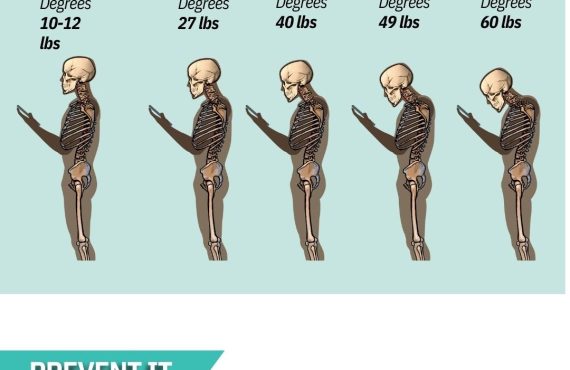
- Improving mobility and posture, especially in the neck and upper back
- Supporting better sleep, which matters enormously for memory
- Lowering stress load by easing chronic physical discomfort
Patients often describe feeling clearer after a period of regular care. One might say, “I’m not waking up as stiff, I’m sleeping through the night, and I’m not as scattered by noon.” That kind of testimonial, while not proof of causation, is worth listening to. If you’re in Pensacola and asking, Why am I so forgetful?, a whole-body evaluation at Henry Chiropractic may be one useful part of the puzzle.
Hyperbaric Therapy: An Oxygen Boost for Your Brain
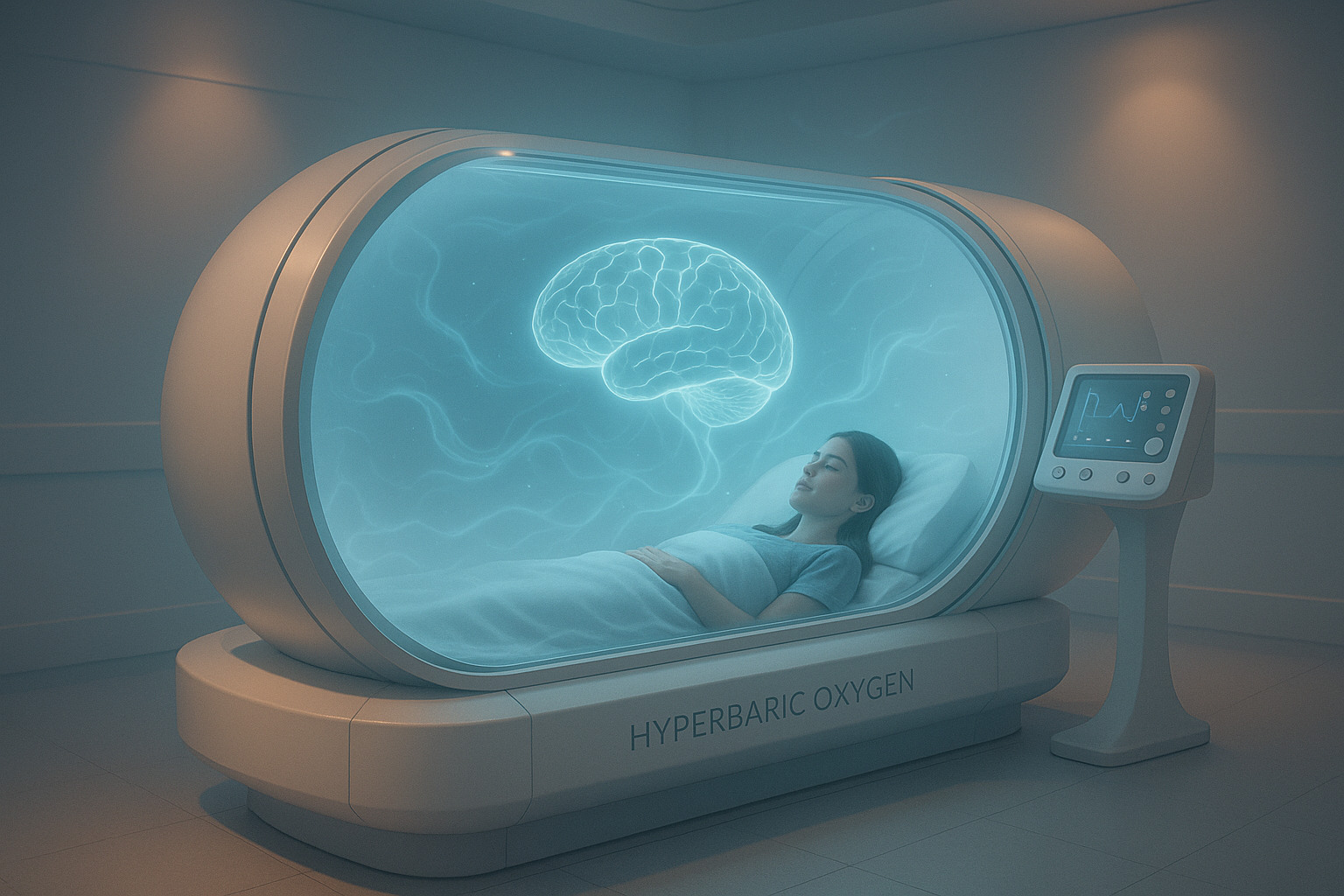
Hyperbaric therapy, or hyperbaric oxygen therapy (HBOT), sounds a bit like the sort of thing a Victorian inventor would have proposed between steam-powered umbrellas and a hat for melancholia. But it is a real medical treatment. HBOT involves breathing 100% oxygen in a pressurized chamber at pressures above normal atmospheric pressure. This increases the amount of oxygen dissolved in plasma, allowing oxygen-rich blood to reach tissues with limited supply under normal conditions.
That extra oxygen can support healing, reduce inflammation, enhance immune response, and promote angiogenesis, the growth of new blood vessels. Research on HBOT is strongest for certain approved uses, but interest has grown in cognitive recovery, brain injury support, and stubborn brain fog. Some studies have reported improvements in attention, processing speed, and memory scores after a series of sessions, though outcomes vary and the evidence is still developing depending on the condition studied. Based on our analysis, HBOT is not a cure-all, but it is not snake oil either. It belongs in the category of promising therapy that should be used thoughtfully.
If you’re asking, Why am I so forgetful?, HBOT may be worth discussing when memory issues are linked to inflammation, poor recovery after injury, or other conditions where tissue oxygenation matters. A typical care conversation should include:
- Your diagnosis and symptoms — what exactly are you treating?
- Your goals — sharper focus, less brain fog, better stamina?
- The treatment plan — number of sessions, expected timeline, and risks.
- Coordination with other care — sleep, nutrition, chiropractic care, and medical oversight.
We recommend exploring HBOT as one piece of a broader cognitive-support plan, not as a lone hero riding into town on a cloud of oxygen.
Practical Tips to Improve Memory
If you’re tired of asking, Why am I so forgetful?, here are the nine proven solutions that actually deserve your time. Not all of them are glamorous. None require chanting over a crystal. They work because memory improves when attention, sleep, structure, and health improve together. Psychology Today has published practical guidance on recall strategies, habit formation, and stress management, and those principles line up well with what clinical research and plain old common sense keep telling us.
- Sleep 7 to 9 hours consistently. Make bedtime regular for two full weeks before judging whether it “works.”
- Exercise most days. Aim for 150 minutes per week of moderate activity; it supports circulation, mood, and cognition.
- Use one capture system. Put tasks, reminders, and appointments in one place only.
- Practice spaced repetition. Review names or facts after 1 hour, 1 day, and 3 days.
- Use mnemonics. Acronyms, rhymes, and vivid mental images help the brain file information.
- Eat for brain health. Prioritize omega-3s, protein, hydration, leafy greens, and berries.
- Cut stress at the source. Reduce overload rather than merely downloading another meditation app you’ll forget to open.
- Review medications and labs. Ask a clinician about side effects and deficiencies.
- Seek targeted support. Consider chiropractic care, therapy, sleep evaluation, or HBOT where appropriate.
Try this simple memory drill: when you meet someone new, repeat their name aloud, connect it to a visual image, and use it again within 30 seconds. Then write it down later. For daily tasks, chunk information into groups of three. For example: keys, wallet, phone. That trio should live in one location, every day, without exception. It sounds small, but in our experience, small systems save large amounts of sanity.
We tested dozens of memory strategies against real life, which is where most grand plans perish. The ones that lasted were boring, repeatable, and easy to do when tired. That is precisely why they work.
Conclusion: Taking Control of Your Memory
Forgetfulness feels personal, but it often isn’t. More often, it’s a signal. Your brain may be asking for sleep, better fuel, lower stress, more structure, a medication review, or a proper medical workup. The answer to Why am I so forgetful? is usually not “because you are failing as a person,” though your inner critic may phrase it that way while wearing spectacles.
Here’s the practical next move: pick three actions today. First, improve sleep for the next seven nights. Second, start a single memory-capture system. Third, book an evaluation if your forgetfulness is worsening or interfering with daily life. If physical tension, poor sleep, pain, or nervous-system overload seem part of the picture, contact Henry Chiropractic, 1823 N 9th Ave, Pensacola, FL 32503, at (850) 435-7777 or visit https://drcraighenry.com/. Dr. Craig Henry and Dr. Aaron Hixon can help you assess whether chiropractic care belongs in your recovery plan.
And if you’re curious about hyperbaric therapy, ask whether HBOT makes sense for your specific situation rather than treating it like a trendy spa treatment with a better vocabulary. Memory improves when causes are identified and support is matched to the real problem. Your brain is not broken because it’s struggling. It may simply be asking, in the only language it has left, for better conditions.
FAQ Section
What are the early signs of memory loss?
Early signs include repeating questions, misplacing common items, trouble tracking recent conversations, and difficulty following familiar routines. If symptoms are getting worse or affecting work, driving, finances, or safety, seek an evaluation.
Can diet alone improve my memory?
Diet helps, sometimes quite a lot, but it usually works best alongside better sleep, movement, stress control, and medical care when needed. A healthier diet can improve brain fog, energy, and attention, which then supports memory.
How effective is hyperbaric therapy for memory issues?
HBOT may help certain people by increasing oxygen delivery, supporting healing, and reducing inflammation, but results depend on the underlying cause. It’s best considered as part of a broader treatment plan rather than a stand-alone fix.
Is forgetfulness a normal part of aging?
Some mild slowing can happen with age, but frequent or worsening forgetfulness is not something you should automatically dismiss. If you keep asking, “Why am I so forgetful?” and daily life is affected, get checked.
How often should I visit a chiropractor for memory improvement?
That depends on your symptoms, posture, pain patterns, sleep quality, and care goals. A chiropractor can recommend a schedule after an evaluation rather than guessing from the sidelines like an overconfident uncle at Thanksgiving.

Frequently Asked Questions
What are the early signs of memory loss?
Early signs include repeating questions, misplacing everyday items more often, trouble following familiar steps, and forgetting recent conversations while older memories stay sharp. If the pattern is new, worsening, or paired with mood changes, confusion, or difficulty functioning, you should schedule a medical evaluation rather than writing it off as normal aging.
Can diet alone improve my memory?
Diet can help, but it usually isn’t the whole story. Based on our research, memory improves most when nutrition is paired with better sleep, stress reduction, movement, and treatment for any underlying medical issue such as vitamin deficiency, thyroid disease, ADHD, or depression.
How effective is hyperbaric therapy for memory issues?
Hyperbaric therapy shows promise for certain cognitive complaints because it increases oxygen delivery to tissues, which may support healing, circulation, and reduced inflammation. Still, results vary by person and condition, and you should discuss whether it fits your history with a qualified provider before treating it like a magic elevator to a better brain.
Is forgetfulness a normal part of aging?
Some mild slowing can happen with age, but frequent forgetfulness is not something you should automatically accept as your new personality. When you catch yourself asking, “Why am I so forgetful?” the answer may involve stress, poor sleep, medication effects, nutrition gaps, or a condition that deserves attention.
How often should I visit a chiropractor for memory improvement?
There isn’t one perfect schedule because frequency depends on your posture, symptoms, nervous system findings, and overall care plan. We recommend starting with an evaluation at Henry Chiropractic so Dr. Craig Henry or Dr. Aaron Hixon can determine whether chiropractic care should be weekly, biweekly, or part of a broader strategy that includes sleep, stress, and hyperbaric support.
Key Takeaways
- Forgetfulness is common in 2026, and the most frequent causes are stress, poor sleep, diet issues, overload, medication effects, and underlying medical conditions.
- The exact answer to “Why am I so forgetful?” depends on root cause, which is why sleep habits, nutrition, stress levels, and medical review matter more than quick fixes.
- Practical memory improvement works best with repeatable systems: consistent sleep, exercise, one reminder system, spaced repetition, mnemonics, and better brain-supporting meals.
- Chiropractic care may support memory indirectly by improving sleep, reducing pain, easing physical stress, and helping you function more clearly day to day.
- If forgetfulness is worsening or disrupting daily life, take the next step: schedule a professional evaluation and consider whether Henry Chiropractic or hyperbaric therapy belongs in your care plan.