
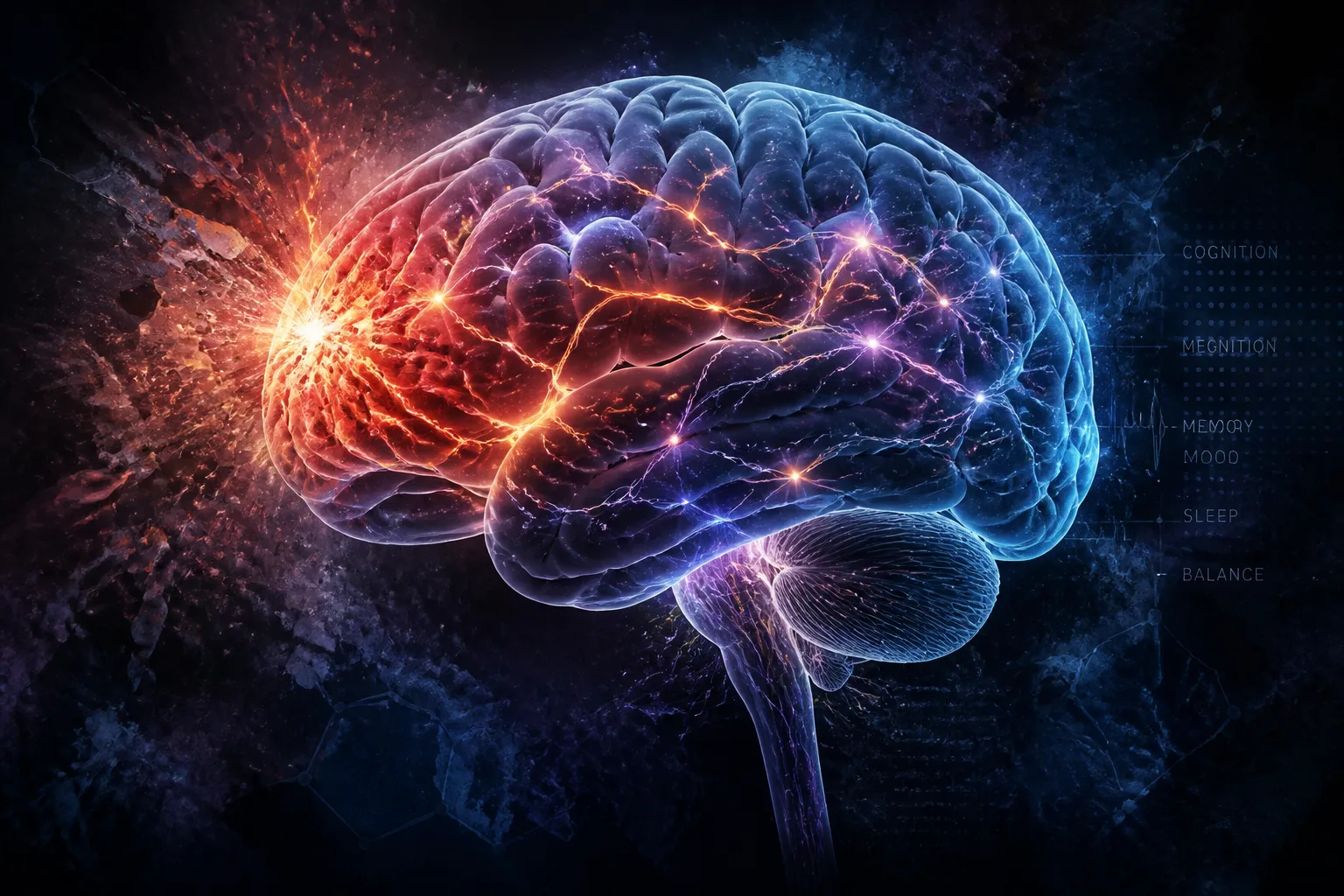
After a head injury, you may experience changes that range from temporary to long-lasting. Concussions, a common type of head injury, can affect physical, cognitive, emotional, and sleep functions, with headaches being a prevalent symptom affecting up to 90% of patients [1][1]. Long-term effects can include post-concussion syndrome, where symptoms persist for more than three months [2].
- Concussion symptoms can affect physical, cognitive, emotional, and sleep functions [1].
- Headaches are a common symptom, affecting up to 90% of patients [1].
- MRI and CT scans often show no evidence of brain injury in concussion patients [3].
- Post-concussion syndrome is diagnosed when symptoms persist for more than three months [2].
- Approximately 15-30% of concussion patients develop persistent symptoms [2].
Table of Contents
What are the common symptoms after a head injury or concussion?
Concussion symptoms can be as varied as a box of chocolates thrown down a flight of stairs. They affect physical, cognitive, emotional, and sleep functions, making life feel like a funhouse mirror reflection of itself [1]. Symptoms can appear immediately after the injury or take their sweet time, showing up hours or even days later [1]. Headaches, affecting up to 90% of patients, are the unwelcome guests that overstay their welcome [1]. Emotionally, you might find yourself riding a rollercoaster of irritability and mood swings, which is less fun than it sounds [1]. Meanwhile, children might display their own brand of symptoms, such as fussiness and a blank stare that says, “I’m not really here” [1].

How is a concussion or mild traumatic brain injury diagnosed?
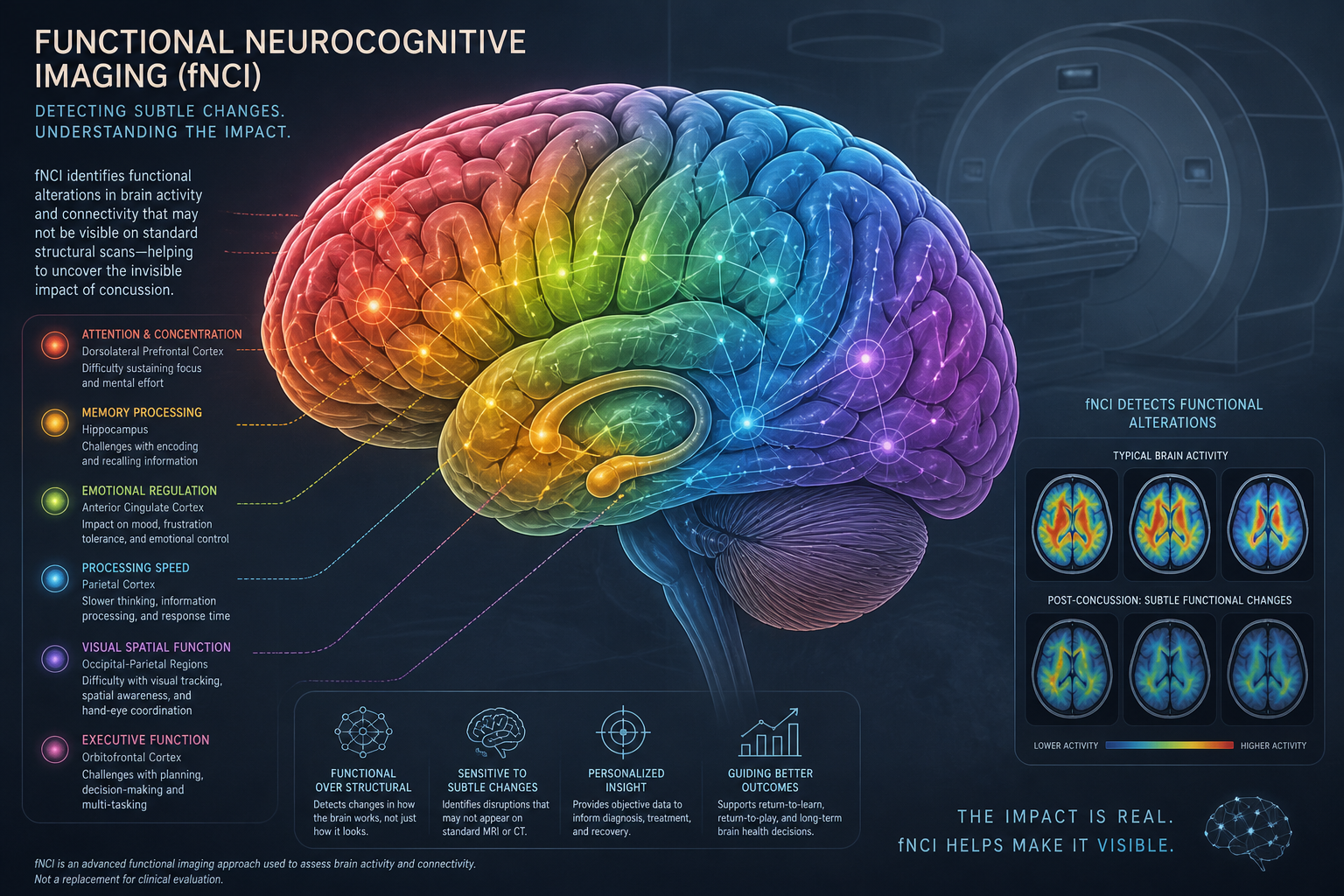
Diagnosing a concussion is a bit like trying to pin the tail on an invisible donkey. No single test can definitively say, “Yes, you’ve got it,” which is comforting in the same way that a mystery rash is comforting [4]. At Cognitive FX, they use Functional NeuroCognitive Imaging (fNCI) to identify affected brain regions, which is like trying to find Waldo in a crowd of neurons [2]. Unfortunately, MRIs and CT scans often show nothing, leaving you with a clean bill of health and a head full of fog [3]. The process involves ruling out other injuries, which is a bit like checking under the bed for monsters [5].
What causes long-term effects or complications after a head injury?
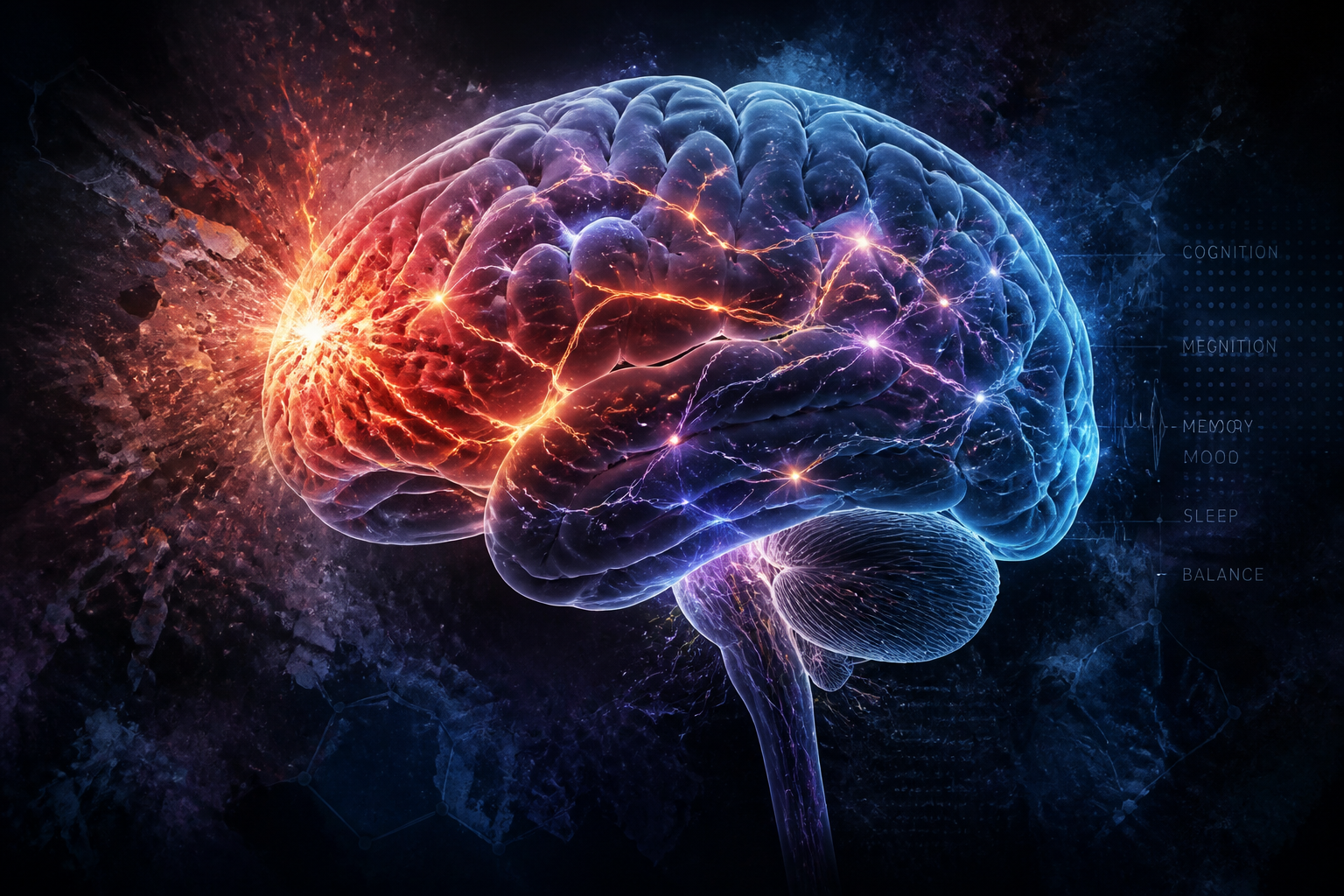
Concussions occur when something jolts or shakes the body, much like a toddler who’s just been told “no” [1]. The long-term effects often stem from dysfunctional neurovascular coupling, which sounds like a bad relationship between neurons and blood vessels [2]. Secondary brain injuries evolve over time, taking hours to days to fully develop, sort of like a slow-cooked stew of discomfort [6]. Neuroinflammation markers can linger for years, like that one guest who never leaves the party [7].
What is post-concussion syndrome and how does it affect recovery?
Post-concussion syndrome is diagnosed when symptoms linger like a bad cold, persisting for more than three months [2]. Symptoms can last more than 28 days, which might feel like an eternity when you’re having a bad time [5]. Recovery can be as uneven as a cobblestone street, with good and bad days [8]. According to the 6th International Consensus on Concussion, symptoms are considered “persisting” after four weeks, which is about as comforting as realizing you’ve locked yourself out of the house [3].
How common is permanent cognitive or emotional change after a head injury?
Approximately 15-30% of concussion patients develop persistent symptoms that can make daily life feel like a never-ending episode of a soap opera [2]. Chronic traumatic encephalopathy (CTE) has been observed in some TBI models, which is about as welcome as finding a spider in your shoe [7]. Fifteen percent of mild TBI patients will suffer from post-concussion syndrome (PCS) [9]. On the bright side, most people recover from a mild brain injury with time, which is reassuring if you’re the patient and terrifying if you’re the clock [8].
Are there treatments available to help recover from concussion-related symptoms?
Active rehabilitation is the most effective approach for post-concussion syndrome, which sounds like a fitness class for your brain [2]. Patients in a program showed an average 75% improvement in brain function, making it the brain’s equivalent of a makeover montage [2]. Treatment often includes physical therapy, occupational therapy, and speech therapy, as if your brain were a contestant in a bizarre talent show [10]. Physical and cognitive rest is recommended post-injury, which means telling your brain to take a nap while you catch up on Netflix [9].

Can someone with chronic traumatic encephalopathy (CTE) live a normal life?
Chronic traumatic encephalopathy (CTE) is associated with tau protein build-up in the frontal lobe, which sounds like a villain from a 1950s sci-fi movie [11]. The condition is common in athletes like boxers and football players, who probably wish they’d chosen chess instead [11]. Living a normal life with CTE is challenging, but with the right support, it’s not impossible, much like trying to assemble IKEA furniture without instructions.
What lifestyle changes or precautions are recommended after a head injury?
After a head injury, protecting your brain from another concussion is crucial, like guarding your last piece of chocolate from a room full of chocoholics [3]. A minimum recovery time before returning to normal life is 21 days, which feels like an eternity when you’re eager to get back to living [5]. Avoiding alcohol during recovery is advised, which might feel like a party without cake, but it’s for the best [8].

| Source | Recovery time | Percentage with persistent symptoms |
|---|---|---|
| cognitivefxusa.com, 2021-03 [2] | Most people recover from a concussion within two to six weeks. [2] | Approximately 15-30% of concussion patients develop persistent symptoms that int [2] |
| cdc.gov, 2025-09 [12] | Symptoms generally improve over time, and most people with a mild TBI or concuss [12] | — |
| ncbi.nlm.nih.gov [9] [9] | Approximately 90 percent of concussion symptoms are transient, and symptoms typi [9] | Fifteen percent of mild TBI patients will suffer from PCS. [9] |
| healthcare.utah.edu, 2025-02 [10] | Recovery from a concussion is usually within a 30- to 90-day window, with most p [10] | — |
| Source | Common symptoms |
|---|---|
| concussionalliance.org [3] | Common symptoms after a concussion include sensitivity to light, sound, and move [3] |
| cognitivefxusa.com, 2021-03 [2] [1] | Headaches are the most common post-concussion symptom, affecting up to 90% of PC [2] [1] |
| healthcare.utah.edu, 2025-02 [10] [10] | Possible short-term effects of concussion include headache, light sensitivity, n [10] [10] |
| biausa.org, 2017-10 [8] | The most common symptoms following a concussion are headaches and “cognitive del [8] |
Key Takeaways
- Monitor symptoms closely after a head injury, as they can appear hours or days later [1].
- Seek professional diagnosis, as no single test can confirm a concussion [4].
- Consider active rehabilitation for post-concussion syndrome recovery [2].
- Protect your brain from further injury by avoiding high-risk activities [3].
- Allow at least 21 days for recovery before resuming normal activities [5].
Frequently Asked Questions
Can you live a normal life with post-concussion syndrome?
Yes, you can live a normal life with post-concussion syndrome, but it may require adjustments. Symptoms can persist for months, impacting daily life, but with proper management, many people find ways to cope and maintain a fulfilling life [2].
What are the symptoms of a mild concussion?
Symptoms of a mild concussion include headache, confusion, lightheadedness, dizziness, and possibly blurred vision or ringing in the ears. These symptoms can vary in intensity and may not appear immediately [13].
What does CTE feel like?
CTE often feels like a gradual decline in cognitive abilities, with mood swings, memory loss, and erratic behavior due to tau protein build-up in the brain [11].
Can people with CTE live a normal life?
While CTE can significantly affect quality of life, with proper support, some individuals manage to maintain a degree of normalcy. However, CTE is associated with cognitive decline and behavioral changes [11].
Sources
- What It Is, Symptoms, Causes & Treatments (2023-09-06)
- Why Symptoms Persist & How to Recover (2021-03-23)
- What happens to your brain when you get a concussion? — Concussion Alliance
- Traumatic Brain Injury (TBI) and Concussion
- Concussion | NHS inform (2024-09-03)
- Traumatic Brain Injury | Johns Hopkins Medicine
- Long-Term Consequences of Traumatic Brain Injury: Current Status of Potential Mechanisms of Injury and Neurological Outcomes
- How long will it take me to recover from a concussion? (2017-10-13)
- Postconcussive Syndrome – StatPearls – NCBI Bookshelf
- Long-Term Effects of Traumatic Brain Injury (2025-02-20)
- Why some concussions are worse than others (2024-12-11)
- Symptoms of Mild TBI and Concussion | Traumatic Brain Injury & Concussion (2025-09-15)
- Symptoms (and Signs) of Concussion or Traumatic Brain Injury